Podcast: Play in new window | Download
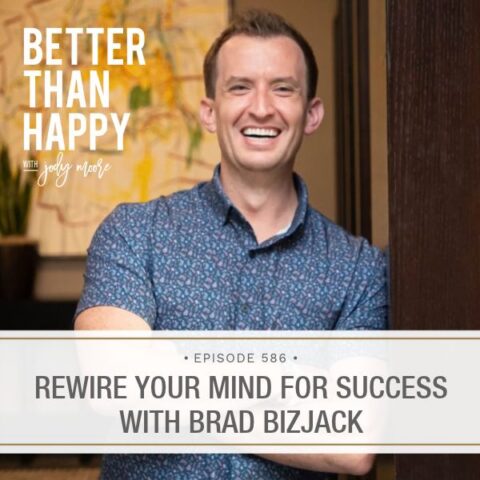
How do you create the success, freedom, and fulfillment you want when something inside you keeps getting in the way?
In this episode, I’m joined by Brad Bizjack, a performance and success coach, to talk about the subconscious patterns and beliefs that influence the results we create. Brad shares why understanding the patterns behind our actions is the key to changing them, and why success requires more than just having the right strategy.
Brad and I explore what it really means to rewire your mind for success, including how to recognize self-sabotage as a form of self-protection, why celebrating yourself can help you move forward, and how creating a new relationship with your goals can change what you believe is possible. You’ll learn how your thoughts, emotions, and actions work together to shape the results you create.
Pro Coach Camp is where you’ll make the shift from amateur to pro in your business. It’s happening October 19th-22nd, 2026. Click here for more details and to register.
What You’ll Learn on this Episode:
- Why your results are connected to the beliefs and patterns happening beneath the surface.
- Why strategy alone isn’t enough if your beliefs and emotions aren’t aligned with your goals.
- How changing your expectations can create more fulfillment in your life.
- Why celebrating yourself can help you take action and move beyond perfectionism.
- How self-sabotage may actually be your brain trying to protect you.
- Why expanding your dreams can require changing the way you see yourself.
- How authenticity and intention can work together to create meaningful change.
Mentioned on the Show:
- Call 888-HI-JODY-M or 888-445-6396 to leave me your question, and I can’t wait to address it right here on the podcast!
- Come check out The Lab!
- Follow me on Instagram or Facebook!
- Subscribe to Jody Moore Coaching on YouTube
- Grab the Podcast Roadmap!
- Join Brad’s free 5-day Success Accelerator on October 19-23, 2026.
Episodes Related to Rewire Your Mind for Success:

Brad: One thing that I really love helping people with is how do we identify those subconscious blocks that are getting in the way of really creating the success, the freedom, the fulfillment that we really deserve? If you think about it, there’s a reason why you do everything you do, and most people have no idea what that reason is subconsciously. And if we can get to the bottom of it, we can see the pattern. And when we see the pattern, we can change the pattern. When we change the pattern, we change the result.
Welcome to Better Than Happy, the podcast where we apply all the tools of psychology, human behavior, and mindfulness to live our best lives, navigate challenges, and achieve our goals. I’m Jody Moore and I’ll be your coach today. Let’s do it.
Jody: If you are interested in succeeding at phenomenal levels, at breaking through your limiting beliefs and blocks and getting moving, today’s episode is for you. Welcome to Better than Happy. I’m Jody Moore. Let’s do this.
Hey there, everybody. Welcome to the podcast. I have such a treat to share with you today. Recently, as in within the last two years, I was introduced to a gentleman named Brad Bizjack, who is a performance coach, a success coach. Brad is in my mastermind group. We go together to a mastermind led by James Wedmore, and I just find myself eating up everything he says. I’ve been wanting to get him on the podcast for a long time, and we finally got him here. So if you want to know how to perform at higher levels, how to achieve more of your goals, and how to enjoy your life as you’re doing it, this is the episode for you.
Before we dive into it, it is one of my most favorite times of the year. It’s the time when I get to teach Pro Coach Camp. To any of you who are coaches especially, but if you have any kind of a business that resembles a coaching practice, meaning you sell courses, you may not identify exactly as a coach, but maybe you’re an expert, a teacher of some sort, and you want to take your business from wherever it is to next level, we need to uplevel your pro status. We need to take you from amateur to pro. And that is what I am very good at helping people do.
So, go check out Pro Coach Camp. It is taught virtual live by me. And so we are going to be able to interact. We’re going to work together during Pro Coach Camp, but by the end, you will be next level in terms of your mindset and knowing which strategies and actions to employ next. So, go to procoachcamp.com to register.
It’s ready to go right now. We are taking students in Pro Coach Camp. It happens in October, and I’ll see you there.
Okay, so you’re going to help us do what today? People, pay attention. Everybody listening, pay attention. If they tune in and they implement even a little bit of what you’re going to teach us, what will be better or different in their lives at the end of this episode, Brad?
Brad: You will have a step-by-step process to an ice pick lobotomy. No, I’m just kidding.
Jody: I’m like, wait, I think I have the wrong guest on my show.
Brad: No, this is one thing that I really love helping people with is how do we identify those subconscious blocks that are getting in the way of really creating the success, the freedom, the fulfillment that we really deserve? If you think about it, there’s a reason why you do everything you do, and most people have no idea what that reason is subconsciously. And if we can get to the bottom of it, we can see the pattern. And when we see the pattern, we can change the pattern. When we change the pattern, we change the result. So that is what we’ll be chatting about today in any which direction we want to go, my friend.
Jody: You guys can tell by that setup why I’m a big fan of Brad’s. We are doing similar, very similar types of work and we use somewhat similar tools and we both have some different tools. But I geek out all day about this kind of thing. Like the subconscious patterns that we’re unaware of that are really driving and creating everything else in our life. And I find it to be so empowering personally, because it means we have the control over changing something.
And tell me if you think of it this way, but, you know, everybody wants to go to just external behaviors and strategy and action, which is not wrong to talk about and to learn about. But I always think this stuff is like the small hinge that swings the big door.
Brad: 100%.
Jody: And that’s why I think it’s so fun because you make a little change in one area of your life and it affects a bunch of areas.
Brad: Yeah, I like to look at success like a combination lock, and strategy being one of the three little dials, right? Like strategy matters. It you can’t head east looking for a sunset, right? Like you need to be doing the right things, absolutely. But let’s say that you have all the right techniques, but you have a belief that says, I’m a failure, right? Or you have this feeling of inadequacy running behind the scenes. You could have the right strategy all day long, but you won’t apply it the right way.
And so one of the keys, and we can go deeper into this if we want to, one of the keys is strategy, but the other two, the belief systems and the energy that you live in, need to be in alignment or that strategy will either not work or even worse, it’ll work and you’ll feel nothing. And that’s where I see a lot of people fall short when they have success, but they don’t have fulfillment, which in my opinion is failure.
Jody: Can you give a practical example of that?
Brad: Yeah, there’s nothing more annoying than a pissed-off rich person, right? Like if you have, if you have all of the whatever success in any category, it could be health and wellness, right? And you could be in the best shape of your life but still feel like not attractive or still feel unhealthy. That’s not successful.
You could have all the money in the world, but if you are feeling broke emotionally, you’re not actually as wealthy as you are on paper, right? So your life is directly proportional to the quality of the emotions you live with on a day-to-day basis. And so if those emotions aren’t in alignment with what you want most, you’re going to have a very hard time experiencing them.
Jody: So let’s give people some examples. I want to just soak up your wisdom and knowledge. I know you have lots of frameworks and lots of tools. I think that’s one of the reasons I love listening to you because you put things in really concrete, systematized ways to understand them. Let’s start with why you think this is a prevalent problem.
I know you coach people on all different kinds of things, right? From personal relationships to business to everything in between. Why is it that just achieving the level of success, for example, let’s say I’m a business owner, right? And I want to achieve a certain revenue goal in my business. And I get there and I don’t feel, like you said, the fulfillment. What is going on there and how does somebody address that?
And then I want to talk to the person who’s not there too, because from that viewpoint it’s like, oh yeah, well, I think that would be really hard. Well, let me why don’t you give me a chance and I’ll see. I want to speak to both because I know we have listeners on both ends, right?
Brad: Yeah, definitely. I honestly think that if someone is at the level of achievement that they’ve wanted for a long time but they’re not experiencing the fulfillment, one of the main culprits is because there is such a high level of expectation that it should be different. And typically people at that level have a moving target of what it should be, what it should look like.
If you take a look at the happiest, most fulfilled people, they typically have the least amount of expectations. And expectations meaning it should be this way. My life should be this way, I should feel this way, my spouse should act that way, my body should look this way.
And I always joke, I heard this from a mentor years ago, you end up shoulding all over yourself, right? And I find that so true where if you have a high amount of expectations, it’s typically correlated with a low level of gratitude. And if there’s a low level of gratitude, then how can you expect to experience fulfillment on an ongoing basis? It simply doesn’t doesn’t happen.
And so if we think about happiness as an equation, right? I would argue that happiness typically exists in people’s lives when the way life is matches how they think it should be. So what do you do when it’s not how it “should be,” in quotes, “should be,” right? Well, there’s a couple ways to go about it. Most people will complain and blame their way through those situations, which is a complete waste of time because you only complain about things that you could do something about but you’re too afraid to, right? That’s what people complain about.
And so a lot of people live in complaining and blaming. Blaming doesn’t change anything about you, right? You could find fault in someone else or something else all day long, but it doesn’t change you. But it’s really attractive to blame something because it gives you a way out of taking responsibility for the thing in your life that you don’t like, right? So that’s how most people would try to solve, call it unhappiness.
Well, another way you could solve it is change the way life is. And that can work, right? But a lot of times these things that people are trying to create, it takes months or years to create it, so you can’t just snap your fingers and all of a sudden life matches your expectations. But there’s one way that’s much more sustainable and that’s change your expectations, right?
My favorite quote of all time is when you trade your expectations for appreciations, your whole life changes in an instant. And if you can take the expectations that you have about how it should be, and instead ask, what am I learning? How can I, how am I growing? What’s beautiful about this? What am I grateful for in my life? The basics of personal development, you will have far more happiness in that moment.
Now, that doesn’t mean that you don’t need to solve a problem or do something to change the circumstance in life, you might have to take some further action. But you’ve heard the Instagram cliches all the time that say it’s about the journey, right? Well, yeah, like if we’re going to go on this journey, we might as well enjoy the ride or what’s what’s the point?
So I would argue that the person that is at a level of, call it material success, and they’re not enjoying it, it’s because their definition of what will cause them to be fulfilled is a moving target. And when that target keeps moving, it just means expectations keep compounding, so nothing’s ever enough. The next thing you know, you bounce from goal to goal, achievement to achievement, and it feels like you’re chasing a ghost. And then you either get to a place where you’re completely burnt out or completely stressed out.
I found that out in my life when I had achieved quite a bit, and I remember I had this overbearing pressure on myself to just create more. I have to take care of my family, I have to do all these things, but and I couldn’t take it. So I had to escape, right? And I live on a beautiful lake and I took the jet ski out, and I found myself angry on a jet ski.
Jody: And you were like, wait a second.
Brad: Wait a minute. There’s something going on here. I’ve never seen someone angry on a jet ski. And so I needed to reel it in a bit. And I just remember breaking down and being like, something has to change. And it’s when I realized that I had far too much expectation of shoulds in my life to where I wasn’t experiencing fulfillment and joy. And we can go deeper in that if you want to. That’s what I would answer for the person that has achieved and some material.
Jody: Wait, wait, wait. Before you move on from that, talk to me about like, okay, that’s great and all, Brad, but let’s say my spouse was just diagnosed with some kind of chronic illness or something, or I have a child struggling with an addiction or how do I let go of my expectation that the people around me be healthier and happier and succeeding and how do you apply it in a situation like that where I’m not on a jet ski?
Brad: It’s a great question. Don’t mistake the word expectation for desire, right? It’s okay to want your partner to be healthier. It’s okay to want your kids to do better. There’s nothing wrong with wanting more. That’s really, really beautiful. But if we think about it from an energetic perspective and step into, I like to joke, Brad’s common sense corner, right? What was what’s actually going to yield a better result if we’re anxious, angry, stressed, full of overwhelm, or gratitude and love and maybe passion, right? Whatever emotions will actually uplift you.
It’s obviously the latter. Those emotions are more likely to get you into a creative state to solve the problem. Now, there might be situations where you’re experiencing pain. I don’t want you to take this, if you’re listening to this, I don’t want you to take this to mean that you shouldn’t experience pain. Pain in life is guaranteed. Suffering is your choice.
And so what I mean by that is, life’s going to life. You’re going to experience things. But can you be in pain and grateful? Yes, you absolutely can. Can you be in pain and experience love? Absolutely you can.
And so the moment you are experiencing the pain, you don’t make the pain wrong. In fact, you allow it to exist, and we can go into detachment if you want to have that conversation too. The pain doesn’t seem to overtake us as much. And when the pain doesn’t overtake us as much, we have more creative faculties available to actually do something about the problem.
One of the reasons why a lot of people get so stuck there is because there’s so much resistance to the situation. And you’ve heard the cliche a million times, whatever you resist persists, right? Well, when we give our personal power away to a circumstance changing, right? My spouse needs to get healthier, my business needs to get better, my kids need to behave more, whatever it is. If you give your personal power, meaning your sensations of beauty and joy, gratitude, whatever it is, your own abilities to discern how to live your life away to that circumstance changing, well, then you have no personal power left to do anything about it.
And if you have no personal power left to do anything about it, how can you ever expect the situation to change? All of life is cause and effect. And if you obsess over the effect, you forget the cause. And if you forget the cause, you can’t influence the effect. So that would be my advice to that person.
Jody: Wow, that’s powerful. Okay, so what about the person striving to try to achieve the goal? And I like what you said in the beginning about, you know, we can have the best strategy in the world, but if I have a lot of thoughts of inadequacy, “I’m not the kind of person who is capable of that.” I hear that a lot. Like, I know that’s true for other people, but it doesn’t feel true for me. And isn’t that… a couple questions, I would love to soak up your strategies to help that person, but isn’t that kind of the human condition? Like, is there a healthy human being on planet Earth who doesn’t at times struggle with worthiness?
Brad: I feel like, that’s a great question.
Jody: If you could just answer that really simple question, that would be great, Brad. I know it’s a big question, but I just want to hear your opinion on it.
Brad: Yeah, I have a pretty strong opinion on this one actually. And I also want to pre-frame this opinion with a heavy dose of compassion as someone that used to for years deal with feelings of inadequacy and lack of worth. I want to start by saying that your objective worth is infinite. And you have a heart that beats 100,000 times a day. You have a beautiful gift of life. You have inherent worth.
Now, while that may be true and that sounds cute on Instagram, our perception of that inherent worth is completely dependent on how we perceive our life, right? So even though worth is infinite, our perception of worthiness can change.
I like to look at our perception of worth as an equation: worth equals love over time. And a lot of times people give their power away to other people to give them love in the way that they want to receive it. So their life is just chaos up and down.
So I alter that equation to worth is how much acts of love do you give yourself over time? If you care deeply about yourself, are kind to yourself, uplift yourself on an ongoing basis, celebrate yourself, are grateful for yourself, over time, you will notice your perception of worth will increase.
But if I were to ask everybody listening to this, and I already know what the answer is because I’ve done this with thousands of people, if I were to ask people listening, how often do you genuinely celebrate yourself? Not just for what you accomplish, but for your actions, how you add value to the world, who you are as a person. Most people would answer “not enough.” And you just found the reason why your perception of worth is so limited.
And we could go in the direction of childhood influence, all of that. Whether it starts when you’re a kid or an adult, it doesn’t take a long time to correct feelings of inadequacy. I would argue at the beginning of an endeavor, everyone experiences doubt, but when it comes to feelings of lack of worth, that can be corrected at any stage, any age in life, as long as you are willing to change the behaviors that lead to the perception of worth increasing. Does that make sense?
Jody: What kind of behaviors are those, would you say?
Brad: Number one, by far and above, is self-celebration. And I like to give my clients a couple of bits of homework on this, and this sounds so juvenile, but it’s so powerful. Sometimes the fun-duh-mentals are important, right?
Jody: Duh. That’s a dad joke.
Brad: That’s a dad joke. I’m a dad. And for all of you listening that are thinking about the, okay, well, how do I actually unlock the success? Don’t worry, we’ll get there in just a moment, but I think this is really important.
Celebrating yourself is one of the greatest ways to overcome perfection. It’s one of the greatest ways to get yourself into more action. It’s one of the greatest ways to boost self-esteem because you’ll actually do hard things. Self-esteem doesn’t come from what people say about you, it comes from overcoming challenge and hardship and doing hard things. And so when you are able to actively celebrate yourself, you will notice your feelings throughout the day improve. When your feelings throughout the day improve, you do more things to change your life, right?
And so I like to give my clients a homework if they’re struggling with this, to celebrate three things on the daily, right? And this is how we take some kind of personal development, ethereal concept and actually make it real. The first is to celebrate the actions you took today because most people, what do they do? They go to bed looking at all the things they didn’t do, right? What still needs to be done tomorrow. But when you celebrate the actions, no matter how small, that you did do, you are literally priming your brain to take more actions the next day. That’s number one.
Number two, celebrate how you added value to the world. That could be making your kids a PB and J, right? It doesn’t need to be some huge thing, but what you’re doing when you celebrate service and adding value, you are priming your brain to activate one of the energies of creation, right? Service to many leads to greatness. So when you consistently prime service equals good, celebrate service, you’re going to do it more. So now you have action and service primed in the brain.
And then third is celebrate who you are. I’m a great mom, I’m a great dad, I’m a great partner. I’m a hard worker, I’m dedicated, whatever it is. Now you’re priming identity concepts that are empowering. So now you have a firm identity mixed with action, mixed with service. The next day, you’re going to dominate.
And so you do that over the course of time, you’ll notice you take more action, but you’ll also notice that perfectionism starts to dissipate. And perfectionism is something I see overwhelmingly, most of the world struggles with this, right? Well, perfection stems from a perception of lack of worth. It’s I will be happy when, and I have to do it perfectly. If I don’t do it perfectly, I’m not enough, right?
And so you either, if you’re dealing with perfection, you either won’t start because you don’t know how, and so you’ll read 15,000 books on the topic but not take action. You’ll either tiptoe around the edges of your dream and you’ll play not to lose instead of playing to win, or you’ll get to the goal and it won’t feel like it’s enough. And so perfectionism comes because we have this perception that if I accomplish it, then I’m finally worthy.
And so what do we do? We downplay our goals, we shrink our goals, and then we crave this sense of worthiness, which becomes this moving target. But when we actually celebrate ourselves on an ongoing basis, which is so simple, that craving of perfection dissipates because you’re healing it at the root instead of at the end. And so that would be my two cents on it.
Jody: I love it. I noticed what’s not in this list is acknowledging where you fell short and holding yourself accountable to making changes. Is there a reason that’s not included?
Brad: No, but I like that. I never thought about adding that. I like that.
Jody: I’m not saying you should. I was just curious. I do a similar practice. I just do it while I’m brushing my teeth because I always remember to do that every night and I’m in front of the mirror and so I purposely make eye contact with myself in the mirror. And my only rules for myself are like this has to be a compassionate, kind conversation.
So some days it’s like, I am so proud of you. Today you did that thing you didn’t, like you put away your laundry in the drawers, folded. And now we don’t have laundry sitting on the floor in your bedroom. That doesn’t happen that often. So thanks for doing that. Or right?
Like you said, it’s not always like a big thing, like you did that big thing in your business. It’s often a small thing, but it’s like, thank you for showing up today for your family and for your job and whatever. I love you, I appreciate you, right? Like just a moment of acknowledgement.
But other days, it is like, hey, hey, what’s going on? It seems like seems like you had a kind of a rough day today and you blew off a lot of the stuff that we thought we were going to do. Are you is everything okay? Do you need something? Like, no big deal. I’m not mad at you. It’s okay. Some days are just like that. But if you need something, don’t be afraid to tell me. Like the same way I would talk to one of my kiddos, right? Who I want to acknowledge and appreciate and be grateful for and then also I want to want to be encouraging them to keep growing.
And doing that, I don’t even think it’s the conversation that I’m having with myself. It’s just the fact that I have a habit of connecting with myself. And it’s literally while I’m brushing my teeth, which is all of like a minute and a half at the most, right? It’s not long. I think when I explain it to people sometimes it feels cheesy to them and I’m like, yeah, it does feel cheesy at first until you get used to it and you find the right dialogue in your head that feels a little more real and not so forced.
But anyway, I was just curious if because, and another school of thought that I do tend to agree with is like you don’t actually have to take time to acknowledge where you fell short. You already are very aware of that. Most people are already very hyper aware of that, but we have to intentionally take time to celebrate what we’ve done well.
Brad: Yeah, I would I would agree with that. I think one of the most beautiful things about that approach, I’ve never thought about that. I really like that, is that it brings a compassionate approach to accountability as opposed to self-punishment, which is what a lot of people do. A lot of people will beat themselves up for not doing something as opposed to a, hey, you need a hug? What’s going on? Let’s talk. That’s a very different approach and I really like that. I think that actually can aid quite a bit in accountability and moving forward.
Jody: So good. So you use this term, “unlock success.” It caught my attention. Can you tell us more about what you mean by that and how just how we do that?
Brad: Yeah. You know, this kind of goes to the person that is struggling to actually get to where they want to go, right? They have the big dreams and the big goals, the vision boards, all of those things. But it’s not actually working. And so when someone’s in this position, they’re either not taking the actions they know they should be taking, or they’re taking all sorts of actions and it’s still not happening and it’s driving them absolutely crazy. And they don’t know why. There’s many, many reasons why this could be. I want to start with the lock you’re trying to open itself.
A lot of times people don’t realize that they have shrunk their goals down from what they actually want to be more realistic, more safe, not because of what they’re experiencing right now but because of past failures, right? Or what other people say. And so, I want to encourage you, if you’re listening to take a look at your dreams and your goals that have not yet come true and actually ask, is this what my heart actually wants? If I had three times more energy and three times more courage, what would I go after?
And if the answer is not a resounding, heck yes, this is what I actually want, well, we found one of the main culprits that your dreams are too small, right? If you feel lazy or unmotivated, you’re not lazy or unmotivated, you just have poor goals.
Jody: And that feels really counterintuitive, right? Because if I, like you said, if I’m taking tons of action and I’m not getting there and I’m frustrated and I’m defeated and you’re telling me, maybe your dream isn’t big enough. How could that be? Because it feels scary to increase it when I can’t even make steps towards the small one I set.
Brad: The only reason it’s scary to increase it is because your perception of worth is based on the outcome. That’s the only reason it’s scary to increase it. So I better play small, shrink it down to something that I know I can accomplish, because if I guarantee accomplishment, then I’m finally enough. But think about when you have a goal that you don’t actually care about, are you going to want to do the things?
Here’s a great example of this, different framework, but I like to look at success like a GPS. I live in Western Illinois. One of my favorite places in the world is Yosemite National Park. I love it. I love hiking there, the waterfalls, all the hikes, everything. And if I want to go on a road trip with my buddies to Yosemite to go hiking, that’s amazing, it’s exciting. But what do most people do? Most people, when they sit down to plug in their GPS where they want to go, the GPS sees where they are, and they plug in a GPS pin based on the current amount of gas they have in the tank. Well, for me, that’s like driving to a cornfield in the middle of Iowa.
There’s corn out my front door. I don’t need to see more. No offense to Iowa, no offense to corn, right? I’m not going to be excited to drive to a cornfield in the middle of Iowa, right? And so what happens? People will plug “cornfield” in their GPS, start driving, like, what’s the point?
When really what they want to do is drive to Yosemite, which is a longer trip, which takes more time, overcoming more obstacles, like driving through the mountains, all the different weather, different topography, all that type of stuff. But people aren’t necessarily willing to do that because they don’t have, they don’t know what it’s going to actually take, so the uncertainty causes them to stay in one spot.
And so they’d rather set a safe goal, but when they start driving towards that cornfield in Iowa, they’re like, what’s the point? There’s corn at home. I’m going to turn around. And so if we relate this back to the lock itself, the reason why going bigger feels likely unsafe is because your perception of worth is based on accomplishment.
And so you’ve heard the cliches a million times. What would you go after if you could not fail? Right? All that stuff. The purpose of a dream is not to accomplish it. It’s to raise your energy. Right? So if, if I think about success, I like to look at my daughter, Lily. She’s the greatest example of success that I know. Because to her, she’s Nala and Ariel and Elsa at the same time.
Jody: Right.
Brad: And the level of creativity and energy that flows through her is amazing. So she comes up with all these amazing ideas and her world changes. That, to me, is success.
So, the first thing is to look at the lock itself. And then if we look at unlocking success, what are the three numbers? I’ll try to keep this concise because I could ramble for six hours on this. The first is the strategy, like we had talked about. I actually should say the last is the strategy. I would argue it’s the least important is the how. The how matters, but it’s the least important.
Like we talked about, you can’t head east looking for a sunset. But if we don’t have the strategy, or if we have the right strategy, but we don’t have the other two numbers intact, the lock doesn’t open. So because we’re craving more certainty, where do we seek certainty? From authority figures, from people that have done it before. So we buy another marketing program, we read another book.
And next thing you know, you have a ton of inspiration with very little action. And so you become this person that knows so much, yet knows nothing because you have a ton of knowledge without much knowing because you haven’t taken the action to do it. So that’s the third number I should say.
The second number on unlocking success are your belief systems. And in most cases, your BS, right? And what I mean by that are the feelings of conviction you have about the world. Most people go through life, number one, not recognizing what their limiting beliefs are, but number two, operating every single day from those beliefs. And they hold them so true that it feels like an absolute conviction.
For example, I ask my students all the time, is the sky blue? And they’re like, yeah. Well, really? What about at night? What about during a sunset? What about a sunrise? What about when it’s raining? What about the scientific answer that’s not any color, right? Like all of these things, right? And so I simply just brought doubt to a belief. But if I have a belief that, let’s say, let’s say you want to improve your finances. But I have a belief that money is hard to make. Once I have a lot of it, it will disappear. And if I don’t have a lot of it, I can’t be happy, which were my previous beliefs
Well, then I’m tapping into a very low level of potential. And if I’m tapping into a low level of potential, then I take very limited, unresourceful action. And if I take very limited unresourceful action, then the results that I get are very poor. And if I get poor financial results, my belief and conviction in money is hard to make intensifies.
This is why the rich get richer and the poor get poorer. Because if I have a belief that says, money flows to me whenever I need it, whenever I want it, then 10 out of 10 potential, 10 out of 10 action, 10 out of 10 results, my belief that money flows to me increases. So you could have the best strategy all day long, but if your belief system is limited, then you’re not actually going to utilize that strategy in the right way.
This, by the way, is why gyms are packed on January 1st but empty by February 1st. Because you’re looking for the right strategy but you don’t have the belief system to actually make it real.
So then what’s the third number? And in my opinion, the first number that causes all of this to flow, and that is the energy you’re living in. Because let’s say, I’ll ask people here, if you had everything you wanted in life, scale of one to 10, 10 being high, what level of energy is that? Most people would say 10 or 11, right? Great.
How often are you in a 10 or 11 energy right now? Because if your dream is at a 10 or 11, but you’re in anxiety or fear, you are not in energetic coherence with what you want. And like attracts like. So if you’re in anxiety and fear and doubt and worry all the time, you’re just attracting more of that into your life. And from a low-level state, what happens to the stories that play in your mind? And when a story plays in your mind over and over again, it becomes a belief or a conviction. So even if you have the right strategy, it won’t work.
Versus if I elevate my energy nice and high and I’m in coherence with what I want most, well, what stories flow out of me? Naturally, I’ll have stories like, I can do this. I believe in myself, whatever it is. And then I’ll actually be able to find or apply the right strategy. Even if you don’t have the right one, you’ll Google it, you’ll ChatGPT it, you’ll figure it out and you’ll do it.
So in my opinion, if someone’s not where they want to be yet, most people look at the strategy, but they’re not looking at the belief systems and the energy going on behind the scenes that are preventing that strategy from working, or the lock is the wrong lock altogether. And that is why their goals aren’t coming true. So that’s a six-hour segment in about five minutes, but I hope that.
Jody: I love it. Is energy similar to or the same as emotion then, would you say?
Brad: I would. Yeah. I would say.
Jody: So what do you say to the person going, oh, is this law of attraction?
Brad: I love this question so much. Oh my goodness. You know, law of attraction’s great. It’s only a piece of the puzzle though, in my opinion. Like, you could argue yes, it is, but it’s only one piece of the combination lock, right? I think a lot of people mistake law of attraction for going to their garden and humming there are no weeds here and expecting weeds to just disappear.
Jody: Yeah. I think a lot of people learned it or they oversimplified it into like magical, mystical, woo-woo, whatever.
Brad: Yeah. I mean, you’ve heard the cliche, your vibe attracts your tribe, right? Like it’s a cliche for a reason. It’s why you naturally gravitate towards people you are most like. And it’s because like energies attract like energies. And that’s just not opinion, that’s science, that’s real. Like energies attract like energies. Like frequencies are, think about it like this. Here’s a good metaphor.
A radio dial, right? There’s all these different stations, 88.9, right? And that’s talk radio. 96.3, B96. 101.9, right? The Wolf. 103.5, Kiss FM. 107.9. All of those are different frequencies. They’re all available at the same time. The one that you hear is the one you tune into.
So, law of attraction, you can argue that it’s part law of attraction, but a lot of people think law of attraction is the same thing as toxic positivity, which is pretending problems don’t exist. And that is not the case. If you ever see someone that is just blindly positive about everything, they’re denying the truth of life that there are hardships and challenges that you need to overcome. I think blind positivity is just as toxic as pessimism. I think what we need is genuine optimism, which is where I acknowledge my reality. My reality is not wrong. This is these are the cards I’m dealt. This is what I’m going to do about the situation and how I’m going to move forward with it.
So, that radio dial metaphor, if we tune in to the right frequency, we start hearing the right music, then all of a sudden, we can start to recognize the patterns of that music. We start to hear the words even when we’re not listening to the radio. And metaphorically, that’s when success starts to take hold. Because going one more thing about this, also something to keep in mind is if we take a look at how the brain works, when we start dialing into higher frequencies, then you start seeing things everywhere that align with what you’re looking for. So, and what emotions you’re living in.
A great example of this is if you’ve ever been in the market for a car and you didn’t know what you were going to buy, and then the minute you decide you want to buy a Honda, you and specifically the model, let’s say a CRV. You see that Honda CRV everywhere, every stop light, every street corner, every parking lot, everywhere. Not because it wasn’t there before. It was always there. You just now were tuned in. You were using, there was a piece of your brain called the reticular activating system that’s basically a great filter for all the things that are not in alignment with what your brain feels is important. This is both from a matter of focus tangibly and emotionally.
And so when you’re tuned into a higher frequency, you’re just doubling down on that, causing your energy to increase, which then influences your stories and beliefs, which then influences how you apply the strategies in your life. So.
Jody: Yeah, I love that. I mean it really is human behavior. It’s scientific. It’s psychology that we, you know, for anybody that’s struggling with this, I would say to just imagine the last time that you had a challenge or problem and people were offering you solutions and you were going, no, that won’t work for me. Or even easier if you recognize this in somebody else, when you were trying to help someone and every time you offered a solution, right? They went, no, that won’t work because ABC. Or no, I’ve already tried that. And we all do that at times where we, we actually want to be right.
I always just say your brain wants to be right more than it wants you to feel better. It wants to be right about what you’re already believing more than it wants you to achieve your goals. That’s its job. And so that is law of attraction at work, you might say, right? Which is like, I’m trying to find proof that I’m right and contribute to being right even if I don’t like what I’m believing ultimately, if I don’t want to be right about it, a part of your brain does.
And that’s why I love how you pointed out all three of these, your energy, your beliefs, and then the strategy you take, and they all go together and you can sort of like use willpower to interrupt and be, you know, for a while, behave in a way contrary to what you believe, but you won’t be able to do that forever. You’ll do it temporarily. And it’s exhausting, right?
It’s just so fascinating to me. I think about too, did you see the movie Marty Supreme, Timothy Chalamet about supposedly based on a true story about this ping pong player. And he takes it to an unhealthy extreme, which you can do, but he just so powerfully believes that he’s going to get to this world championship ping pong tournament that it’s like nothing will stop him and everything becomes an opportunity to get there. He’s a great ping pong player, but other than that, he has no money. He has everybody’s against him. He’s not a great guy, so he keeps creating more problems for himself. But he’s doesn’t ever give up on just he just knows he’s going to get there.
Brad: Yeah.
Jody: And that’s an extreme version of it. And again, it can it can get to an unhealthy level like that where he’s kind of going to get there at all cost, which is not exactly healthy. But it’s I just love seeing examples of like, if you genuinely align your beliefs and your energy, like you said, then the actions you will figure out or they or you will take them in a more effective way. And I love knowing that because it makes our lives like unlimited, unlimited in the end. It’s so much fun.
Brad: I totally agree, my friend. And can I add one note about self sabotage really quick?
Jody: Please. Yes.
Brad: I know that there’s someone right now listening that says, this makes sense, but I just self-sabotage. What’s the point anyways? And what you said a minute ago, Jody, really, it activated a thought in me where and I have, maybe a, I don’t know if it’s counterintuitive or just different approach on how I view self-sabotage. And so feel free to disagree, shoot it back if you feel that this is counterproductive, but I think self-sabotage is impossible.
And allow me to explain. A lot of times, if you think you self-sabotage, you’re not sabotaging; you’re actually keeping yourself safe. So when you think about a goal where it’s two steps forward and three steps back, and you say, I self, I’m self-sabotaged. Well, your brain is a survival mechanism. Its job is to keep you safe. Its job is to scan for threats at all times, right? It just wants to make sure you’re going to be okay.
So it values familiarity very highly. It likes what you know how to deal with. So even if, let’s say anxiety or worry or scarcity or little money in the bank, whatever it is, even if it’s painful, if it’s what you’ve been dealing with for a long time, it’s familiar. And so the devil you know how to deal with is easier than the devil you don’t know how to deal with to the survival brain. And so it’s it will always default back to what is familiar.
So, let’s think about the idea of succeeding more and abundant wealth and more money, more free time, total choice, best shape of your life, all whatever the goals are. Well, that’s unfamiliar. That’s not known. That’s uncertain. And so to the survival brain, growth, success means threat of death to the untrained brain.
And until you rewire that, you’re going to find yourself in a spot where it’s two steps forward and three steps back. So now you have growth, success meaning threat, and scarcity, fear, doubt, whatever, meaning safe, familiar, the brain will then default to what’s familiar and go back to it. And you label this as self-sabotage.
But think about it like this, why would the world’s most advanced survival mechanism intentionally destroy the very host it was designed to protect? It never would. So all that’s happening when you quote unquote self-sabotage is your brain is finding what’s familiar and finding ways back to it. And until you change what’s going on subconsciously and energetically, it’s going to feel like constant self-sabotage.
But the good news is this is very easy to shift. It just there’s a process on how to do it. But a lot of times people don’t realize that, no, they don’t self-sabotage. They just their brain’s doing what it’s meant to do.
Jody: It’s self-preservation.
Brad: 100%.
Jody: Yeah. Which goes back to the idea that we’re all self-interested and on operating from that space. I do think also, and I know we’re out of time, but I just want to hear your thoughts on one other topic because I’m I’ve been trying to flush out this concept and I’m not even sure what I think about it yet. So I want to hear your opinion because we talk a lot about authenticity.
Authenticity being important in relationships to build trust, but also again for my entrepreneurs and coaches who are building businesses. It’s like when you create content, you got to be authentic. That’s the most important part. And I think true authenticity is nearly impossible. And I think that sometimes people are putting so much pressure on themselves to be authentic that we’re freezing up over it.
So for example, this is my theory again, that’s not well flushed out yet, but I think that we have to balance authenticity with strategy and I don’t know if strategy is the right word, but let’s take in my marriage, for example. If I’m to be truly authentic, it’s going to turn into a lack of kindness at some point, right? Like I’m not going to tell my husband, Jake, every thought that comes to my mind,
Brad: You’re not?
Jody: No. And nor would I want him to tell me every thought that comes to his mind, right? Like I want to be kind and I want him to be kind. And yes, I want us to be honest and trust each other. I don’t want him to pretend to be someone that he isn’t, but also there’s a strategy in my marriage of like maintaining a healthy relationship.
And even in my business, I want to show up and create content that’s authentic, but I’m not going to share everything I’m feeling, everything I’m thinking at like that just wouldn’t serve my clients in the end. And so I know this is a little bit of a right turn from self sabotage, but I think it’s a similar like when again back to the Marty Supreme example, it’s like, not that he was sabotaging his goal necessarily, but he was so determined to reach his goal that he was sabotaging his relationships and he was, you know, like just again, overall, not a great guy, the way he was portrayed in this movie.
And so it’s like, no, there’s a balance between going after what you want, but like you said, providing something valuable to the world and anyway, I just want to hear your thoughts and make sense of what I just said, would you, Brad?
Brad: Oh, yes. I love this conversation so much. Um, so a little backstory. I, not a long backstory, I promise, Jody, because I could go on for hours.
Jody: No, you’re good.
Brad: There’s someone in my family from my past that I had a, it was very challenging when I was growing up. And I remember when I would go over to this person’s house for years, I would struggle and I would have a very hard time with the criticism and all the things that would happen, right? And it just ended up being a really poor experience that led to arguing all sorts of things, right? And I think we can kind of get where that’s going. Until I realized the power of state and intent. And so what I started doing on the way to this person’s house is I would start blasting Taylor Swift with Janise, my wife in the car.
Jody: Yes, good choice.
Brad: Yes. Excellent. Excellent choice. We’d blast Taylor Swift or something, right? And then when I would get to the house, I would say, my intention going into this house is to be forgiving, loving, and warm. And I would walk in and I would notice at first, I would looked like I was crazy, like, why are you being so kind all these things?
But eventually I influenced the state of the room and the experience was much better. And yes, there were still times when the result wasn’t there and I would have to go and recharge the batteries, all of those things. And what I found was that holding an intention across multiple emotions that would serve the situation led to the most ideal outcome.
And so if we look at authenticity as a blanket statement, I’m going to be authentic. Well, the world doesn’t want you to share your dirty laundry every single day on the internet. That’s not, I think a lot of people take authenticity to mean I’m going to talk about my, you know, what happened when I was four, right? And all this stuff, like and just go into detail about how hard it was and all this stuff. That’s no, authenticity means just being real, right? Real about what you’re experiencing.
Well, what if we view authenticity as an emotional intention that’s paired with maybe in the case of goals, passion. That’s paired within the case of goals, the emotion of success, right? And we view it like a shake recipe or a smoothie recipe, where it’s a piece of that where maybe and maybe authenticity is like kale. It’s incredibly healthy, but too much of it and the shake tastes terrible, right? And so no offense if you like a lot of kale. I’m not a big kale guy.
And so I like to look at authenticity as an intention, one of many, towards an ideal outcome. And that way it takes the pressure off of airing everything and instead it’s, how can I be the most authentic version of me while still servicing the people that I need to service in the best way? What other emotions? Do I need to bring courage? Do I need to bring love, warmth, and authenticity to this conversation? And how do I blend that together to lead to a transformation for somebody? So I view authenticity as an intention instead of a blanket state.
Jody: And I love that because it kind of brings us back full circle to what you’re talking about in the beginning of worthiness. Authenticity is a focus on myself. Like, am I being real? Am I being genuine? Am I showing up in the right way? Whereas a lot of those other things you talked about, passion, forgiveness, depending on the scenario, right? Those are about, yes, what I want to feel, but what I want to invite others, right?
When we talked about going into the house ahead of time, what you’re doing is amping up your energy level to try to make the momentum of your energy strong enough that you don’t get impacted by the momentum of whatever other energy anyone else might bring.
And so, anyway, I love the idea of like a shake recipe where it’s not just about me. In fact, it’s hardly about me. It’s mostly about my customer or client or my husband if I’m having a conversation with him, and what do I want to invite into this scenario here? What am I bringing to it?
Brad: Yeah, love that.
Jody: So I love that. So good.
Brad: Yeah. We can add that to the framework. There you go.
Jody: Yeah, there we go. Well, I seriously could talk with you all day. Maybe we’ll have to have you come back for a part two at some point because I know you have a lot more that we would love to steal from you, but we’re out of time. So let’s tell people how to come and learn more from you, Brad. Where should people go?
Brad: Yeah, you know, this is really great timing with this episode. A lot of people listening to this right now are probably in a place where they’re like, this makes a lot of sense, but how do I apply this to my life and what I have going on?
Well, in a just over a week from now, I have a free five-day challenge coming up called the Success Accelerator. And the purpose of this challenge is to, number one, identify what is it that you want in every category of your life. What are the deepest, darkest held subconscious beliefs and energy patterns getting in the way of that coming true? And then that week, we go to work on how do we rip those out, get rid of them, and then recondition new ones so that you can actually rewire your mind for the success, the freedom, the fulfillment that you’re really after.
So it’s a really beautiful process. We have helped now almost 100,000 people with this. It’s proven time and time again. But yeah, we start on the 19th. And so I think that’s in about a week and a half or so. It’s totally free. There’s no cost to it. But I think that’ll be the best way to actually take what we talked about today and make it actually real.
So if you’re wondering how these successful people created the success and fulfillment in their life that they’ve been after, this is a great, a great starting point to actually take this and make it real in your life.
Jody: It’s so generous of you. I’ve been through Brad’s challenges before and he’s an amazing teacher as you all know. So I’m going to be there again this year. Can’t wait for it. Where do we send people? Do we know that yet?
Brad: Yeah, I’ll share the link with you just put in the show notes. But just we have a, we’ll finalize the link in the next couple of days and get them over to you.
Jody: Okay.
Brad: But we’ll just we’ll send it over to for everybody.
Jody: Okay. So, go to the show notes, grab the link, everybody. Success Accelerator, free five-day challenge. Thanks so much, Brad. You’re very generous with your time and your tools, and I just appreciate you. Thanks for coming on.
Brad: Thanks for having me, my friend. It was a pleasure to be here and I’m glad that this added value.
Hey everybody, thanks for listening today. Please do me a favor and make sure you’re following or subscribed to the show if you got a lot out of this and share it with a friend. Make sure you never miss an episode and help me spread the message of mental and emotional health and creating your best life. I’ll see you next time.
Enjoy the Show?
- Don’t miss an episode, follow on Spotify, Apple Podcasts, YouTube or RSS.
- Leave us a review in Apple Podcasts.