Podcast: Play in new window | Download
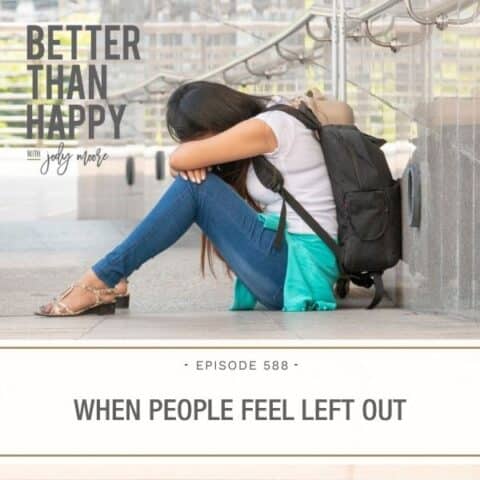
What do you do when someone feels left out? Whether you’re navigating cliques among teenagers, feeling excluded from a group of friends, or noticing someone on the outskirts of a community, these situations can be hard to navigate. And sometimes, we don’t even realize when we’re contributing to the problem.
In this episode, I’m sharing an activity I created for the young women I work with to help them understand group dynamics, recognize the different roles people play, and learn how to be more kind and inclusive. We’ll explore why people form cliques, how fear and insecurity can influence our behavior, and what we can do when we find ourselves feeling left out or see someone else being excluded.
Tune in this week to learn how to navigate these situations with more awareness, respond to exclusion without taking it personally, and become someone who helps others feel welcome. I’ll also share practical activities you can use with teenagers or adults to encourage more kindness and inclusion.
Better Than Busy is coming back in January of 2027. Sign up now to learn how to create a life that’s better than busy, and to receive the amazing bonus planner so many of you are dying to get your hands on!
What You’ll Learn on this Episode:
- Why feeling left out is a normal part of being human.
- The four roles people can play in group dynamics: the Chief, the Enforcer, the Mirror, and the Nomad.
- How fear and insecurity can influence exclusion, gossip, and other unkind behavior.
- How to respond when you feel left out without turning to shame or blame.
- Ways to help others feel included without assuming you know what they need.
- How to focus more on what you can contribute to a group than what you can get from it.
Mentioned on the Show:
- Call 888-HI-JODY-M or 888-445-6396 to leave me your question, and I can’t wait to address it right here on the podcast!
- Come check out The Lab!
- Follow me on Instagram or Facebook!
- Subscribe to Jody Moore Coaching on YouTube
- Grab the Podcast Roadmap!
Episodes Related to When People Feel Left Out:

What do you do when people feel left out? When the women that you go to church with feel left out because some women have become closer friends and do things sometimes in smaller groups, and you know that’s okay, but you also understand why other women feel left out. Or when you see teenage girls, whether they’re your own daughters, or again, young women that you work with in your church group, like I do, and some of them feel left out.
What do you do about this? How do you break up cliques? How do we teach people, both adults and youth, to be kind and inclusive? And what do we do if we find ourselves feeling left out? That’s what we’re talking about today. I’m Jody Moore. We’re talking about cliques and what to do when people feel left out. Let’s go.
Welcome to Better Than Happy, the podcast where we apply all the tools of psychology, human behavior, and mindfulness to live our best lives, navigate challenges, and achieve our goals. I’m Jody Moore and I’ll be your coach today. Let’s do it.
Hey there, my friends. I have a great episode for you today. I recently dove into a little online research to study this topic of cliques and just learn a little bit more about how to help empower people because I have the privilege and honor of working in our young women’s group. And as young women’s leaders, we wanted to empower the girls to be able to navigate when they’re feeling left out and also just teach them kindness and inclusion and all the things that we think are part of our job as young women’s leaders.
I work with the most amazing group of young women. I love them so much. They are such kind, good people, and many of them are already very good at this. But we just wanted to address it on a bigger level. And so I, like I said, kind of did some research, did a little studying, did some thinking and some pondering and some praying, and put together an activity that we did with our young women that was so helpful. And so I thought, why not share it here on the podcast? Because I know many of you will find this useful for your young women, but it’s also going to be very useful with adults. This is great for boys, too.
Or if you are a parent and you have daughters or adult children navigating this situation, maybe you even find yourself feeling left out or at the receiving end of some unkindness. Or maybe you want to be more aware as somebody who is more of a leader or more influential of just how to help people feel included and unified. That’s why I’m teaching this today.
Now, before we get into the presentation I want to give you, which again, I’m going to walk you through, and then you can duplicate it exactly as I taught it here if you like it, or you can absolutely make it your own. But first, it is the most wonderful time of the year coming up. And you might think that’s about the holidays, and it is. I love the holidays. But it’s also about Better Than Busy. So we taught Better Than Busy, I taught Better Than Busy, I should say, last year. And you guys loved it so much and loved the planner that you get when you join me for Better Than Busy so much that I have started to get bombarded with people saying, are we doing that again? I want to get my 2027 planner. And the answer is yes, of course, we are. We have the planner ready to go. In fact, should I do a grand reveal right here on the podcast? Hold on, let me grab it.
2027 planner. We like to do a new cover every year. My amazing designer, Dina Rudder, does the cover. And this planner has a very specific interior system that works really well with the human brain. But you can’t just buy this planner. I’m sorry. I do not sell planners. I’m not in the business of selling planners. This planner is a free bonus that gets sent right to your door. It’s a very thick, sturdy eight-by-10 planner that will get sent to your door when you join me for the course, Better Than Busy.
So that is available now. And you can go sign up for it, and your planner will get sent to you right away. Better Than Busy won’t actually happen, the course won’t take place until the end of January. So head on over to JodyMoore.com/busy. Sign up for the course and you’ll get the planner as a bonus. Makes for a great Christmas gift, too. Holiday gift. Can’t wait to walk you through how to use this and how to create a life that is better than busy.
All right, let’s dive in. So, again, this dynamic that exists in human beings where we get together in groups is a very natural and healthy thing that we do. In fact, it’s rooted in survival, right? Our ancestors needed to live together in tribes in order to survive. They literally could not probably find enough food on their own, most of us, right, without support to survive. We needed each other for protection from dangerous animals, from weather, from other tribes maybe wanting to take our cave, etc. We certainly need each other to reproduce and keep our species alive, and we need each other for emotional and physical comfort.
So all kinds of reasons why being in tribes was at one point a very necessary survival tool, still is a necessary survival tool, although it’s changed a little bit how we utilize it, right? But this tendency to be in groups or communities and then break off into smaller groups is rooted in our tribal nature, okay? And so it’s not a bad thing, but if we don’t understand it, then it can lead to hurt feelings, let’s just say, right? If we don’t understand what’s going on in the dynamics at play and a little bit about human behavior, then we may take things personally that we shouldn’t, we may not be as aware and inclusive as we want to be, and there’s just a lot of problems that exist with being in group dynamics, right?
So, again, this activity we taught to our entire young women, and they were so beautiful and responded so well to it. And so I wanted to share it with all of you who might find it useful for any age group.
Okay, so first thing we did is we gathered the young women, and I shared a personal story. So I love starting out any kind of lesson with a personal story, especially when you’re talking to youth. You’ve got to get them engaged. You’re competing with their phones and their lives are way more entertaining than ours were. So I start out with a story. I put up a picture of myself in first grade, which was very entertaining to them because I’m an old lady to them. They’ve never pictured me as a first grader. So, cute little picture of me in first grade, and I told them the story about how painfully shy I was.
I got such bad anxiety going to school, but not about the school part, about the recess part. Because I was so shy, I did not know how to talk to other girls on the playground or other kids, and I felt really silly being outside at recess all alone. And the truth is, I’m sure other kids were nice to me. I don’t think I did sit alone at recess, but I was just afraid that I was going to so much that I would pretend to have stomachaches so that they would send me to the office, and then call my mom, and she would often come pick me up. Or I probably really actually gave myself a stomachache by just making myself so anxious thinking about how scary recess was going to be.
Recess came three times a day. So this was a problem, right? And this went on for a couple of years until I was in about third grade. And a girl named Amy Gunther changed my life. Amy Gunther, wherever you are in the world today, Amy Gunther, bless you. Thank you for changing my life. She was a cool girl. She was a ballerina, so she wore her hair in a slicked-up bun every day because she had to go right to ballet practice after school. And she wore cute clothes. And we just thought she was so cool for some reason. And she was, I remember her being kind of quiet and nice. But for whatever reason, we kind of put her on a pedestal.
And one day Amy Gunther’s mom called my mom and invited me over for a playdate after school. I got to be real with you. I don’t remember that playdate. I don’t remember what we did. I just remember having a change of heart, a change of mind, where I decided if Amy Gunther wants me to come over and play with her, I must be okay. I must be okay. And everything changed for me that day forward. Now, everything wasn’t solved. I wasn’t a different person overnight, but just that little subtle shift in my mind that I must be okay, maybe people could like me or do like me, maybe I’m not a weirdo, etc., just gave me a little boost of confidence.
So, whatever story you want to share, the idea is to evoke some kind of emotion, right, in the people that are listening. And what I wanted to do was inspire them to be an Amy Gunther, to see that a little tiny thing, Amy’s mom probably made her invite me over for all I know. I don’t know. But it was such a small act, but it can make such a big impact on someone’s life. And so that’s what we’re going to talk about here in this activity, right? Is the way I set it up.
So then I went on to explain to them that guess what? If you’ve ever been the person who feels left out, you are not alone. And when you feel left out, you feel like you’re the only one because you’re left out, right? But I talked about, again, and that’s why I shared that personal example, I said, every one of us, even at my age, even your moms and your grandmas and your dads and your brothers, everybody feels left out at times. It is a human condition. It is something that happens because of the dynamics of human behavior. It doesn’t mean that you’re a weirdo. It doesn’t mean that you’re always the one left out. It’s very normal, natural. You ask any adult, they will have a story to share with you about a time when they felt left out. I’m pretty confident that’s the case, right?
Next, we talked about that every one of us also is guilty sometimes of not being as inclusive as we could be, of not paying attention to what’s going on around us or to even acting in a way that we might call immature or selfish or mean. We are all human beings, and that this message I’m going to share is not meant to call anybody out or certainly not meant to shame anybody. But if you feel a little bit uncomfortable as you hear some of it, then maybe that’s a good thing. Maybe it’s you deciding that you want to be a little bit more aware or make some changes.
Okay. So because this was an activity for our church group, I pulled a video off the LDS website, ChurchofJesusChrist.org, that was a two and a half minute video of The Parable of the Lost Sheep. And so we began with a Christ-like focus on how Christ is aware of every one of us. In the parable, right, the shepherd represents Christ who leaves the 99 sheep to go and find the one that is lost. And that is, Jesus is so aware of every single one of us that he will come and find even the one who is lost. And so just a reminder that we are all of worth and value no matter how you feel, no matter what’s going on around you, no matter how anyone else is treating you, you are worthy, and every other person is, too.
And then we also talked about the scripture, Men Are That They Might Have Joy. Because I remember as a youth being really impacted by a speaker pointing out that it doesn’t say men are that they might have fun, or that they might be popular, even that they might be happy. There’s nothing wrong with having fun or wanting to be popular even, or being happy. Those are all beautiful parts of life, but your true purpose is to have joy, right? Men are that they might have joy. And I just love thinking about, like, if that’s what I’m designed for, then I want to experience that as much as possible. And what is joy? Right?
So to me, joy is different than happiness. Joy is the full range of emotions. Joy includes the contrast of negative and positive. Joy is sometimes sacrificing. What I told these girls is like, happiness is getting a gift and getting that thing that you really wanted as a present. That’s fun. That makes us happy, right? We feel happy often. But joy is earning the money to get the thing you want and then going and buying the thing. It means there was sacrifice involved. Not only do you get the thing, but you have the growth and the progress and the self-trust and the self-confidence of having earned the thing. That is joy.
And so just like my insulated Stanley cup is designed to keep water cold, if I took it and put a bunch of paintbrushes in it and just put them in the cupboard to store paintbrushes, that would be kind of a waste of that Stanley cup because its purpose is keeping my water cold. So nothing wrong with storing paintbrushes in it, but we hope to use it for its primary purpose to really get the most out of it, to really maximize that item. And that’s how we are as human beings. We are meant for joy.
Okay, so then we went on to talk about, like, why it can be difficult, right? And I got this idea from my wise sister, Natalie Clay. I talked to a lot of people. I talked to other people I think are wise about these topics. I talked to my daughter who is a 19-year-old girl and so has experienced some of this even recently. I talked to lots of people. And Natalie suggested that we teach a little bit about tribal behavior. And so that’s what I did.
Again, these were teenage girls, and so I had to explain like what that even means that we are tribal creatures. And I just reminded them about how our ancestors used to live in caves and they needed each other to survive. And then I kind of put up some pictures of like other cultures to show like this is not just a, you know, United States of America thing. In every culture in the world, from like third-world countries and people living in indigenous situations and tribes literally to very affluent first-world countries, people live together and work together and group together. And so this is a very natural and healthy, dynamic of being a human being. It also can be challenging and presents challenges, right?
So again, because this was a church activity, we connected it back to the scripture from Mosiah, which is in the Book of Mormon, Mosiah 3:29, I think is the scripture. Let me get it for you guys. I’m sorry, Mosiah 3:19, that talks about the natural man, right? That the natural man is an enemy to God. And I explained to the girls that I don’t think that means that you naturally are an enemy to God. It means that you have these instincts and impulses that can serve you very well, but if they are overused, if they get out of hand, if you don’t manage them, they can create problems. And they are in opposition to your own spirituality, your own divinity, your own connection to God, right?
So we talked about hunger is a very useful, natural man phenomenon that we need. And eating food is fun and good. But if all I did was sit around and eat food all day and eat the kinds of food that my brain likes the best, like junk food, that ultimately would get in the way of my spirituality, my physical health as well, and my life experience. And that’s what we’re talking about here with this tribal behavior that is a natural man thing, right?
So again, just to reiterate, tribal behavior really helps everyone thrive, but, and this is kind of the distinction I started to make for them. I said, when it’s driven by fear or insecurity, then it creates problems. So, being in groups, even the roles we’re going to talk about that emerge, very healthy, very natural. But if people in those roles become insecure or afraid, then we’re going to see problems. Okay?
So I broke it down into these four roles. There’s lots of people out there talking about tribal behavior. You can break it into a whole bunch of roles. I just wanted to keep it simple for them. I kind of gave it these names. You’ll find all different people describing it in all different ways, so you can feel free to modify this if you want. But I broke it into the four roles of the Chief, the Enforcer, the Mirror, and the Nomad.
Okay? And so I’m going to go through how I kind of taught each of these roles to the girls. First, we talked about the Chief. So the Chief being the leader, right? Which sometimes is a formal assignment. So I gave examples of, we have a bishop of our ward, we have our young women’s president, you have class presidents, right? These are formal assignments where this person is asked to be the Chief or asked to be the leader. And this person’s job is to dictate the group norms and trends and boundaries and sort of decide who is approved of and who is cast out, if you will.
So this can be really helpful in keeping everybody organized and productive. And if they are coming from a healthy place, they’re promoting good, healthy norms and values and maybe protecting people from danger. But if the Chief or the leader is driven by insecurity or fear, they might exclude people for the wrong reasons. They might also influence others to do the same or they might be promoting unhealthy values. They may even start doing unkind or dishonest things in order to maintain that role, which is unfortunately a common problem we see with this role of the Chief, right?
The next role we talked about is what I called the Enforcer. So the Enforcer is, it might be one or there can be a couple of these. They’re sort of the Chief’s right-hand men or women. So these would be counselors in the bishopric, counselors in a presidency. But in an informal situation, in a friend group, sometimes you have a Chief that’s kind of the main Queen Bee, right? And then you have kind of her closest friends, her sidekicks.
So, again, in a healthy environment, this is not a bad thing. These people help the Chief, they reinforce messages, they can provide for great communication and execution of tasks that the leader wants to see happen. This can be very great for a group dynamic. But if this person is driven by insecurity and fear, or if the Chief is driven by insecurity or fear, they may influence the enforcers, right? And then it can become things like gossiping, giving the cold shoulder, or being unkind in order to maintain, again, their role and their closeness often to the leader.
So with each of these, obviously, if you can think of examples from like movies that girls may have seen or things, I don’t recommend calling out examples from the actual group you’re teaching because you don’t want people feeling identified or shamed. But there’s usually lots of examples in the media or things that you could point to that might help to demonstrate this.
Okay, the third role, the Mirror. So the Mirror survives by blending in. This is where probably the majority of the people in the group, especially if it’s a big group, are going to fall. So these are people who’ve paid attention to the norms and values, they follow along, maybe they dress the right way, they talk the right way, they’re engaged in the right activities, etc. And so they kind of blend in with the group. And that is a very comfortable and safe space for a lot of people to be in.
So, again, this is not a problem. This can create cohesion in a group. Again, if their values are good, this is promoting goodness. And these people are often contributing to the group in small ways as well. Now, if this person becomes insecure or is driven by fear, it can be sacrificing your own individuality just to blend in. It may look like people-pleasing. It may turn into a little bit of dishonesty as we try to just appease the group. This person also can be guilty of gossip and exclusion and things like that, either due to lack of awareness or due to being driven by insecurity or fear and a desire to maintain their role as being part of the group. Notice the theme here. Whenever anybody starts behaving unkind or quote unquote bad, it’s because they are feeling insecure or afraid. Good to know, right? Not that it excuses behavior, but just good to know if you’re feeling at the receiving end of it.
Which kind of brings us to the fourth role, which is the Nomad. Okay? So the Nomad is the individual who doesn’t really fit the group’s criteria for any number of reasons. And often this person feels exposed or invalidated or invisible. Now, notice this person is, we’re still classifying them as part of this group. So for whatever reason, they may interact with these people regularly. Maybe they’re just people that you go to school with or they’re in your young women’s group, and you still interact with the group, but you don’t fit the majority of the norms.
So the benefit of this person is that they are usually holding a little bit tighter to their own individuality than the rest of the group. They are maybe more aware, or maybe they have individual things that they couldn’t change if they wanted to, or they don’t know how to. And so that kind of individuality and diversity is actually really good for groups. We need diverse ways of thinking and diverse people with diverse skills and opinions and talents, etc., to makes a group better. So we love and want these people in our groups.
If this person starts operating from fear or insecurity, then he or she may distance themselves from the group. And often what it looks like is the shame-blame trap. First of all, feeling really wrong, like there must be something wrong with me because I don’t fit into the group here. And then second of all, they’ll often start blaming and judging the other people in the group for not including them. And either one of those, shame or blame, is going to leave them stuck and feeling victimless.
Okay, so next, after kind of explaining these roles and discussing them with the girls, then we went through each one again and we talked about, what do you do when you’re in this role? What would be the best way to show up that is going to be you at your kindest? That is going to be you at the most Christ-like version of you? That’s going to feel the best and serve everybody the best. And I tried to then also give them examples of people that I knew they might know because they’re in our church group, that they go to church with us, or again, maybe somebody from the media where I would share a personal example of like, here’s an example of somebody doing this really well.
So when you’re the Chief, you want to remember that you’re setting the example for other people. You have to be extra aware of your behaviors when you’re in this role. And really importantly, lead the way for how you want others to behave. Be welcoming, be abundant, be inclusive, be open. And really importantly, don’t let this position become your identity or sense of self-worth. Because most all of us will be in this Chief role in some form or another at some point in our lives, but that doesn’t mean that you are a chief. None of these roles is an identifier that we would say, you’re this, and you are that, and I’m this. Every one of us in different groups are going to play different roles. So if the Chief starts getting their identity or their sense of self-worth from this role, then that puts them in fear and insecurity of losing it, which is often not result in our best behaviors, right?
When you’re the Enforcer, when you’re that kind of right-hand man to the leader, or maybe you’re just very close friends with them, be a positive influence on the Chief by inviting kindness and openness and again, promoting what are healthy values. And again, do not let your position become your identity or your sense of self-worth. We see this in social groups, right, where we have the Queen Bee and then we have the people around her kind of fighting for the right-hand woman role, if you will. And it’s often not going to serve you to be in that role. So communicate with respect to the leader and the group. That’s how you can really be a force for good in that role.
Next, again, when you’re the Mirror, there’s nothing wrong with wanting to be like others and fit into the group, but make sure you stay in touch a little bit with what you like and who you are and don’t be afraid to be the odd man out in certain ways. Don’t be afraid to honor your individuality when you want or need to. Certainly be aware of people-pleasing, be aware of being out of integrity with yourself. And then also like really make an effort to keep an eye out for Nomads, which brings us to the Nomad.
Remember that if you are feeling any kind of rejection, if people truly are being unkind, it’s driven by fear and insecurity. It’s not about you, okay? So don’t make it about you. Give people the benefit of the doubt. Most of the time, what’s happening is that the rest of the group is not noticing you. They’re forgetting that you may be on the outskirts because most other people are inviting themselves, including themselves, bringing themselves in. So it’s not that you’re not wanted, it’s that people sometimes are not good at noticing. So don’t be afraid to invite yourself into the group, to say, hey, next time you go do that, I’d love to come. Can you add me to that text thread? And jump in there and visit with people when you want to, and when you don’t want to, that’s okay, too. Don’t make it mean there’s something wrong with you or that that people don’t mean well. Most of the time, they do.
Okay, so after we talked about these four roles, and again, I’m sure you can flesh these out in a discussion form, you can give examples, I would highly recommend you do all of those things. I made just a few overall recommendations for everyone. Again, I can’t emphasize enough that nobody is any one of these things. In different groups, you might be in one group, like I have a good friend who gave me permission to share her as an example to the girls because she’s in our ward. And in our friend group, she doesn’t share a lot of the same interests that many of the other women share. She doesn’t really get excited about talking about clothing and going shopping or makeup or house interiors. She’s not into that kind of thing, but she loves sports.
So in our friend group, she’s the Nomad, but when she goes to her BYU alumni meet-ups, she’s probably a Chief or an Enforcer, or if nothing else, a Mirror when she’s around all these other women that she knew in college who are also athletes and love to talk about sports. So you’re not any one thing. In different groups, you’re going to play different roles. And this is why it is a really good idea to be a part of a lot of different tribes. Yeah, it’s okay to have a different friend group at school than you have when you go to church and be part of your young women’s group, and also maybe you want to join other groups, clubs, sports teams, book club, whatever you want to do. Have lots of different tribes and play lots of different roles in them and know that whether you choose to or not, you will probably throughout your life. Focus more on what you’re contributing to the group than what you’re getting from the group.
Oh, this is a big one. I remember being single, going to a young single adult ward and feeling like, wow. I still went to church because I had a testimony of Christ and I wanted to go to church, but I felt like everyone there was gorgeous and had fancy clothes and better style and they were smart, and there was like competition for finding a spouse. And I remember thinking, I don’t know that I’m getting a lot out of coming to church.
And then I decided, what if I stopped thinking, what am I gonna get out of coming to church? And I decided to just focus on what am I gonna give when I come to church? Who am I gonna lift up? Whose day can I try to make? What can I give? I get when I take the sacrament, that’s for me, but the rest of it is for what can I give? And that’s when church became a lot more fun for me. And then final reminder, don’t take other people’s behavior personally. It’s not about you, especially when they are quote unquote mean, it’s coming from insecurity.
Okay, so this was the best part of our activity, I think, this next part. Okay? So I highly recommend whether you’re teaching this to young people or older people, if you’re teaching it in kind of a group setting, that you do this next part, which was the other leaders and I, the other women in our young women’s organization, we acted out scenes for them. Okay? And we decided to act out scenes from our group of women our age. So adult women, because again, we didn’t want the girls feeling called out on anything. So we said, okay, we’re going to demonstrate for you some real-life scenes that happen frequently around here, and we want you to pay attention to what we do well, what we could do different.
And so we had people acting out these different scenes. So we did Ward Beach Day, because we live in San Diego, so we go to the beach in the summer multiple times a week. And so we had, we brought our beach chairs and our sunglasses and our hats. And we sat down in a row like we do at Ward Beach Day. And then three of the women started having a conversation with each other and closing in a close circle and talking quieter and quieter until it became apparent that they were having a private conversation and didn’t want the other two women in on it. And the other two women talked about how they always do this, and they feel left out and whatever. Okay, so of course the girls can immediately identify like, hey, have that conversation later.
But we had them go through a bunch of options. There’s many things that we can learn from any of these scenarios, right? Like the two women feeling excluded could have also pulled their chairs over and gone, hey, what are you guys talking about? We want to be in on it. Tell us. If it really was a private conversation, they could have said, oh, sorry, this is just about our boys’ soccer team. We just need a minute, and then we’re going to be right there and we want to hang out. Like just communicating even goes a long way, right? So we acted things out like this. I think the more dramatic and silly you can be, the more memorable it is for the girls and the people listening.
But we did Ward Beach Day. We did a an example of just walking into Relief Society, which is the women’s class at our church and having your group of friends sitting on one side and some other woman sitting alone and your friends say, come over here, we saved you a seat. And maybe you even kind of notice, but you decide to go sit with your friends. And again, we talked about all the different roles. Like, yes, she could have gone and sat with the woman who was alone. Maybe that’s the right thing to do sometime, but she also could have just invited her over to sit with the friends, or she could have grabbed one friend and said, come with me, let’s go sit by that woman who is sitting alone. The woman sitting alone could have invited herself in, or maybe she wanted some alone time and that’s okay. And she could say, thanks, you guys, I’m good. I kind of want some alone time today.
So lots of ways to handle it. We talked through all of them and the girls came up with lots of ideas. We did one of walking through the grocery store and seeing somebody and you’re just not in the mood to talk. How do you navigate that? We did another one where you’re playing a game and it’s only a four-person game and somebody wants to join in, but they don’t even know how to play the game. Again, you can come up with scenarios. The more dramatic and silly you can be, the better. Bring props. That is what I think helps people remember a lesson or an activity like this, in my opinion.
So, I ended with a activity, and you can decide whether you’re going to do this or not. But because I was talking to young girls, but I would even do this with adult women, I love to have people think about their future self and who they’re becoming. And these girls are amazing, but they’re in the thick of maturing and growing up, right? And so I took pictures of them and put them into AI and aged them all to be about in their mid-20s, and they were all gorgeous. And then I printed their pictures, and on the back, I put a kind of fill-in-the-blank letter from their future self.
So I did the pictures just to kind of be fun and silly because I knew they would get a kick out of that. But I had them fill in the blanks, and that’s again because I was working with youth. If you have adults, maybe you just have them write a letter and you let it be open-ended. But I said to them, hey, the decisions you’re making today are determining the person that you’re going to be tomorrow. And by tomorrow, I mean down the road, right? Literally tomorrow, but also years down the road. And I want you to imagine yourself in your mid-20s and you’re living a great life and you’re happy and you’re doing well and you have friendships and relationships and whatever else you want in your life and you’re making a little money and you’re learning a lot and you’re growing. Like picture your future self doing well, living the kind of life you want to live.
And now I want you to go to her, and she’s going to give you some words of advice. She’s going to give you some thoughts. They filled in the blank on this letter that said, Dear blank, where they wrote their name, right? Thanks for being such an amazing blank-year-old girl. They filled in the blank. You may not know it yet, but blank is struggling and could use a little extra attention right now. You may want to fill in the blank from time to time. Again, this exercise is meant to help them like maybe get a little bit of inspiration. Maybe the Spirit’s going to talk to them this way.
It continued on. I know sometimes you feel blank at school and blank about going to young women’s, but I want you to know that, fill in the blank. I know you’re worried about, fill in the blank, but you should know that, blank, right? Then we went on. The choices you are making today have made me who I am now, and I’m so glad you chose to blank and didn’t blank. And then we just ended it. I love you and the Lord loves you. Thank you for being brave and strong and kind, love. And then they filled in their name.
So, again, you can decide if you want to add that part or not. You can go to our website and get the transcript of this podcast episode if you want to copy and paste that and create a little letter for them to fill in. I just love to have them do a little bit of reflecting, a little opportunity for the Spirit to talk to them. But I’m sure there are things you could add or modify that would make this even better than what we were able to do. I just thought I would put this out there because I know it’s an ongoing problem.
I also want to add that words don’t teach, experience teaches. So by no means am I saying, just teach this lesson and then you’re good. No one’s going to feel left out. Everyone’s going to be inclusive. This is going to be a a fix-all. That is not going to be the case, right? If it were that easy, we wouldn’t have this problem ongoing. But it’s a good starting point. It brings some awareness, it teaches some valuable skills, and even if one or two people in your group latch on to it and benefit from it, I think it’s a win. So, I look forward to hearing how it goes if you choose to do something like this. Thanks for joining me today. I’ll see you next week for another episode. Take care.
Hey everybody, thanks for listening today. Please do me a favor and make sure you’re following or subscribed to the show if you got a lot out of this and share it with a friend. Make sure you never miss an episode and help me spread the message of mental and emotional health and creating your best life. I’ll see you next time.
Enjoy the Show?
- Don’t miss an episode, follow on Spotify, Apple Podcasts, YouTube or RSS.
- Leave us a review in Apple Podcasts.